This imarku santoku knife review looks at a seven-inch Santoku built for everyday chopping, slicing, dicing, and mincing. Its scalloped hollow edge and Pakkawood handle make it a practical option for cooks who want a versatile prep knife.
imarku Santoku Knife Review Summary
The quick verdict
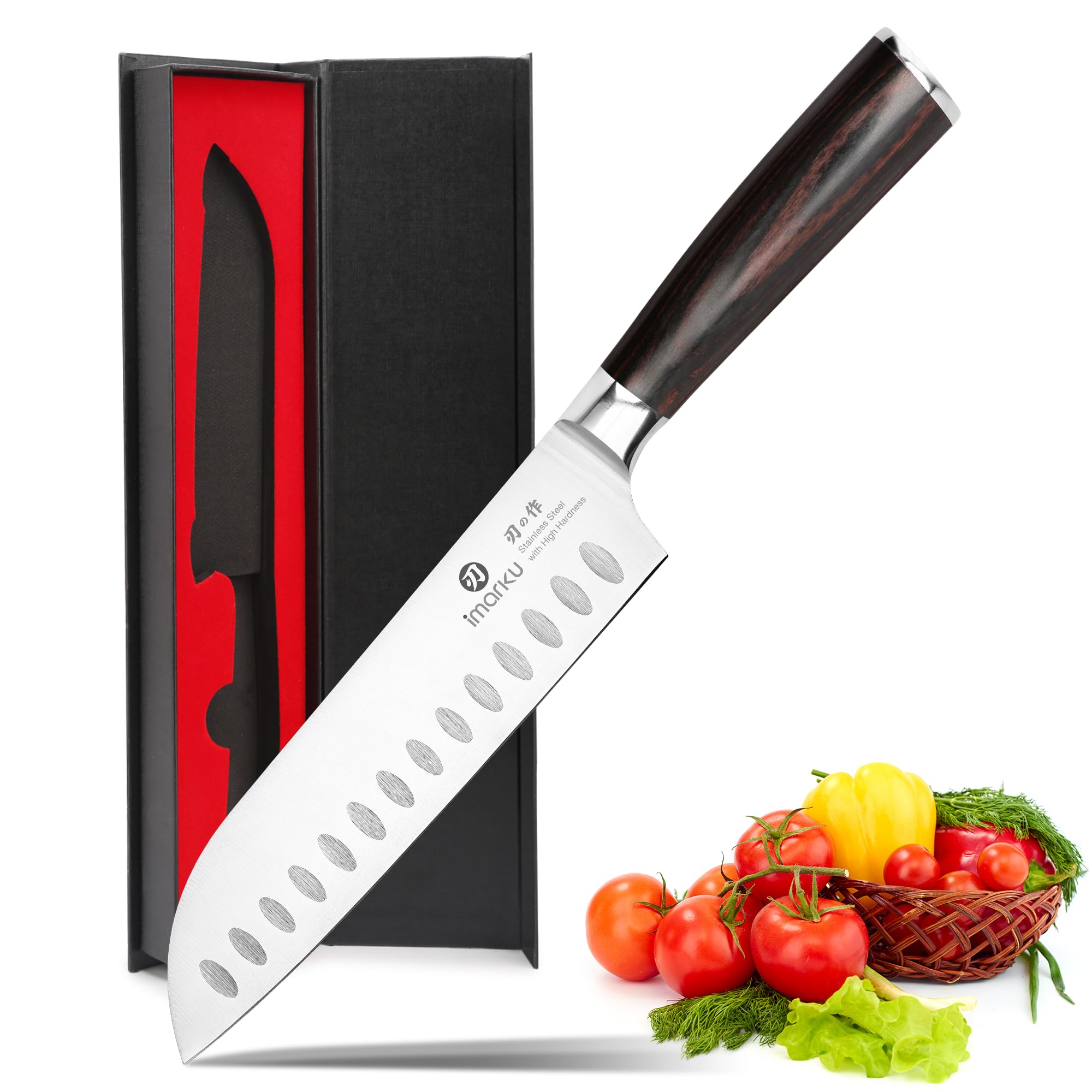
6,000+ ratings
Read Amazon Reviewsimarku Santoku Knife
A seven-inch Santoku for cooks who want a high-carbon stainless blade, a scalloped edge, and a Pakkawood handle for everyday prep.
- Seven-inch Santoku blade made from high-carbon stainless steel.
- Scalloped hollow edge creates a gap between blade and food to help limit sticking.
- Hand-polished edge angle of 15-18 degrees per side.
- Blade thickness is 2.5mm.

Pros
- Seven-inch blade offers a versatile size for a range of everyday prep tasks.
- Scalloped hollow edge is designed to help food release from the blade during slicing and dicing.
Consider before buying
- The seven-inch blade is a fixed size choice, so consider whether it suits your typical board space and cutting style.
- The scalloped edge is intended to reduce sticking, but the design does not remove the need to clear food from the blade during prep.
Read the full review summary
The imarku Santoku Knife combines a seven-inch high-carbon stainless steel blade with a scalloped hollow edge intended to create space between the blade and food.
That design suits cooks who regularly slice, dice, and mince produce or meat and want a knife positioned for varied home-kitchen prep.
Its hand-polished edge is described at 15-18 degrees per side, and the Pakkawood handle is shaped to offer a secure grip while minimizing wrist tension.
Those details make it worth considering for cooks who value a fine edge and a contoured handle, while the fixed seven-inch blade is the central size choice to weigh against their usual prep style.
The buying factors
imarku Santoku Knife Scorecard
Editorial scores reflect listed features and buyer fit; they are not laboratory measurements or customer ratings.
Everyday versatility
The knife is intended for chopping, slicing, dicing, and mincing meat, vegetables, fruit, and bread, giving it a broad role in routine meal preparation.
Blade design
The scalloped hollow edge creates gaps intended to reduce food sticking, a useful feature for repeated slicing and dicing.
Edge geometry
A hand-polished edge of 15-18 degrees per side gives buyers a specific sharpening geometry to consider when choosing a fine-edged kitchen knife.
Handle design
The Pakkawood handle is designed to provide a secure grip and minimize wrist tension, making handle shape a clear part of its appeal.
Blade material
High-carbon stainless steel is specified, with resistance to rust, corrosion, and discoloration as a material benefit for regular kitchen use.
Gift packaging
A black gift box gives the knife a gift-ready presentation for buyers choosing it as a kitchen present.
Key Features and Specifications of imarku Santoku Knife
- Seven-inch Santoku blade made from high-carbon stainless steel.
- Scalloped hollow edge creates a gap between blade and food to help limit sticking.
- Hand-polished edge angle of 15-18 degrees per side.
- Blade thickness is 2.5mm.
- Pakkawood handle is shaped for a secure grip and reduced wrist tension.
- Designed for chopping, slicing, dicing, and mincing meat, vegetables, fruit, and bread.
- Supplied in a black gift box.
Pros and Cons of imarku Santoku Knife
Pros
- Seven-inch blade offers a versatile size for a range of everyday prep tasks.
- Scalloped hollow edge is designed to help food release from the blade during slicing and dicing.
- High-carbon stainless steel is described as resisting rust, corrosion, and discoloration.
- Pakkawood handle is designed to provide a secure grip and minimize wrist tension.
- Gift box gives it a ready-to-present format.
Consider before buying
- The seven-inch blade is a fixed size choice, so consider whether it suits your typical board space and cutting style.
- The scalloped edge is intended to reduce sticking, but the design does not remove the need to clear food from the blade during prep.
- If handle material or care requirements are deciding factors, check those details before purchase.
Who Should Buy imarku Santoku Knife?
Good fit
Choose the imarku Santoku Knife if you want one seven-inch knife for chopping, slicing, dicing, and mincing across vegetables, meat, fruit, and bread.
The scalloped hollow edge is intended to create separation between the blade and food, which may appeal to cooks who spend a lot of prep time slicing and dicing.
It is also worth considering if a Pakkawood handle and a 15-18 degree-per-side hand-polished edge match your preferences. The black gift box adds convenience if you are buying a kitchen knife as a present.
Who should skip it
Skip it if your preferred prep knife is smaller than seven inches or you want a different blade profile; this is specifically a seven-inch Santoku with a scalloped hollow edge.
Look elsewhere if your decision depends on a verified result for sharpness or wrist comfort, since those outcomes can vary with technique and use.
The knife's edge angle and handle design provide useful selection details, but they do not guarantee a particular experience.
imarku Santoku Knife Review: Blade Design, Handle, and Everyday Prep
A versatile Santoku profile
The knife is positioned for chopping, slicing, dicing, and mincing across meat, vegetables, fruit, and bread.
That range makes it a plausible all-purpose prep choice for a home cook, though the seven-inch blade remains a specific size preference rather than a universal fit.
What the hollow edge changes
The scallops create small gaps intended to keep cut food from sticking to the blade.
This is most relevant to repetitive slicing and dicing, where food release can affect the rhythm of prep; it remains a design aid rather than a guarantee that every ingredient will release cleanly.
Steel and edge geometry
The high-carbon stainless steel is described as resisting rust, corrosion, and discoloration, while the hand-polished edge is set at 15-18 degrees per side.
Together these are concrete material and edge details for shoppers comparing kitchen knives, although they do not establish how long the edge will stay sharp in a particular household.
Handle fit and ownership
The Pakkawood handle is shaped to provide a secure grip and reduce wrist tension, making it a consideration for cooks who prioritize handle feel.
The stated after-sales terms are three months for refunds and one year for exchanges, but those service periods are separate from the knife's cutting features.
Alternatives to imarku Santoku Knife
Santoku Knives alternative
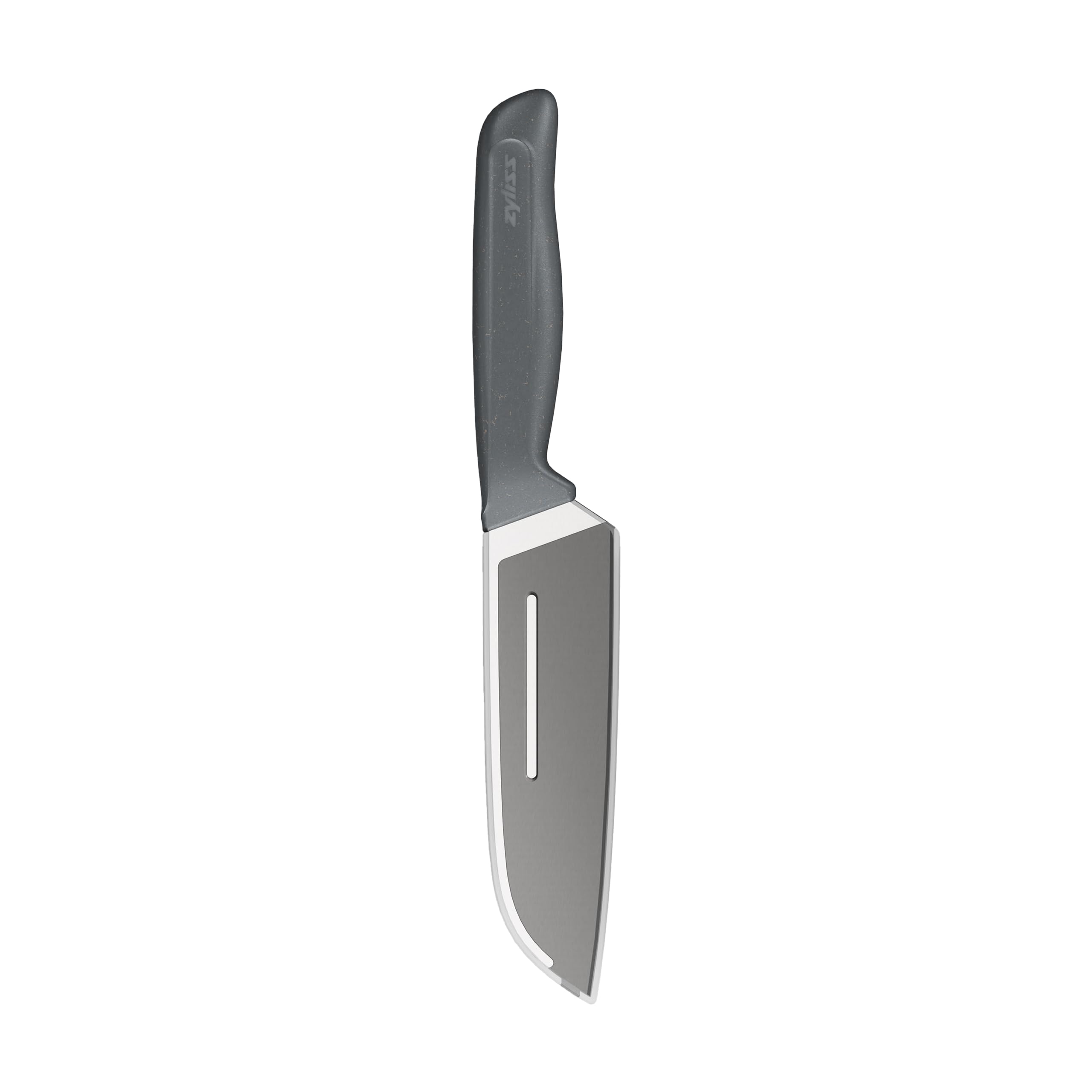
1,000+ ratings
Read Amazon ReviewsZyliss Comfort Santoku Knife
Choose the imarku for its longer seven-inch blade and scalloped edge; choose the Zyliss if you prefer a 5.9-inch blade, a guard for storage or camping, and a handle designed for wet-hand control.
- The Zyliss has a 5.9-inch Santoku blade, a protective blade guard for camping or drawer storage, and a non-slip contoured handle intended to provide control with wet hands.
- The imarku is a seven-inch Santoku with a scalloped hollow edge designed to help limit sticking, plus a Pakkawood handle intended to provide a secure grip.
Santoku Knives alternative
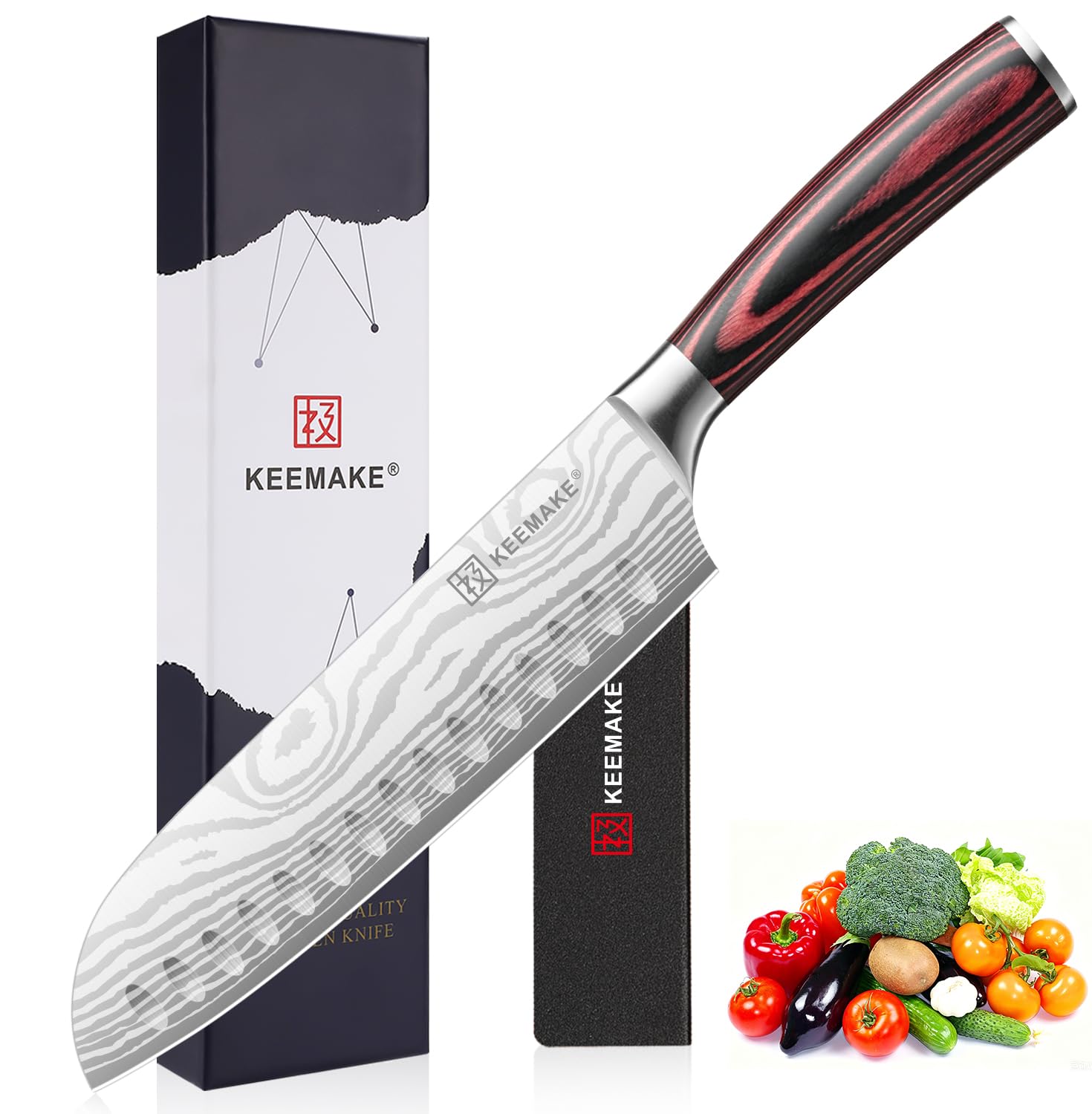
600+ ratings
Read Amazon ReviewsKEEMAKE 7" Santoku Knife
Choose the imarku if its 15-18 degree-per-side edge and scalloped hollow design fit your preferences; choose the KEEMAKE if you want a hand-sharpened 12–15° edge, a wave-patterned blade, and a flatter edge for push cutting.
- The KEEMAKE is a seven-inch Santoku with a hand-sharpened 12–15° edge per side, a wave-patterned blade intended to reduce food sticking, and a flatter edge that supports push cutting.
- The imarku has a seven-inch Santoku blade, a 15-18 degree-per-side hand-polished edge, and a scalloped hollow design intended to help reduce food sticking.
Is imarku Santoku Knife Worth It?
The imarku Santoku Knife is worth considering if you want a seven-inch, high-carbon stainless Santoku for varied everyday prep, with a scalloped hollow edge intended to help food release and a Pakkawood handle designed for a secure grip.
Its edge angle and handle shape are useful selection points, but the right fit depends on your preferred blade size and grip.
For a gift, the black box makes the presentation convenient. For daily use, decide whether the seven-inch Santoku profile and 15-18 degree-per-side edge match your routine; cooks who want that combination have a clear reason to shortlist it.
Your review at a glance
6,000+ ratings
Read Amazon Reviewsimarku Santoku Knife
A seven-inch Santoku for cooks who want a high-carbon stainless blade, a scalloped edge, and a Pakkawood handle for everyday prep.
- Seven-inch Santoku blade made from high-carbon stainless steel.
- Scalloped hollow edge creates a gap between blade and food to help limit sticking.
- Hand-polished edge angle of 15-18 degrees per side.
- Blade thickness is 2.5mm.